
Villa Park Neighbor Record Sources
Official sources show parcels, recorded owners, map districts, transactions, and a few match-only facts. They do not publish a complete block roster. Use the DuPage Parcel Viewer to define the immediate area, then open the right county or state record for each question. Villa Park neighbors who occupy a parcel may differ from the owner shown on its property card.
| Source | What It Shows About a Block | Access |
|---|---|---|
| DuPage Parcel Viewer | Adjacent shapes, PINs, addresses, districts and imagery | Free map, buffer and selected exports |
| Property Records Search | Owner, billing and situs fields for one mapped parcel | Free online card or county help |
| Illinois voter lookup | Match at details already supplied by the user | Not a browseable block list |
| Recorder deeds and plats | Transaction parties, lot, block and subdivision context | Online index, desk and archives |
| VPPL local sources | Older address links and public civic contacts | Library, museum and organization pages |
A matching billing and property address can be useful, but it still does not establish every occupant. Recorded documents identify transaction parties. Public civic pages name groups and meeting contacts, not private members. Treat each result as one fact tied to its date and custodian.
Read Villa Park Parcel Fields
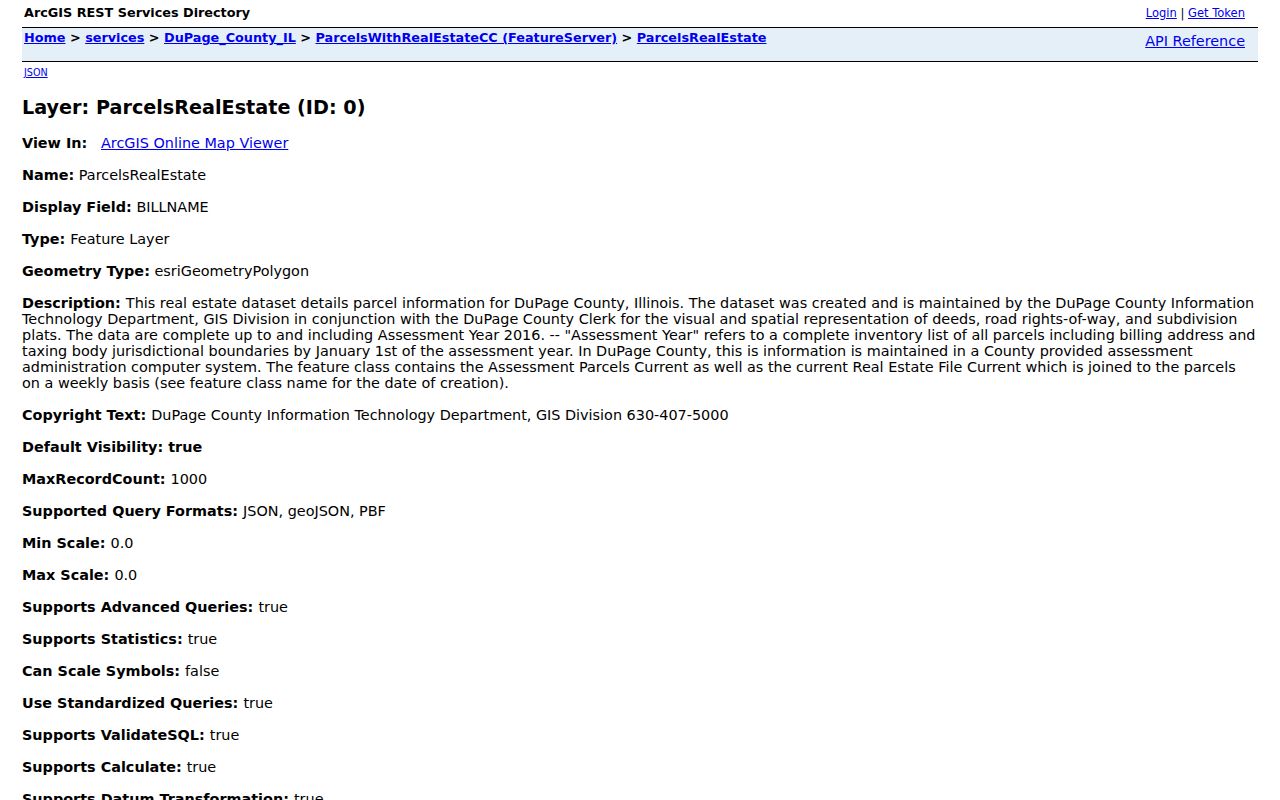
The public DuPage parcel feature service keeps property fields separate from billing fields. Property street number, direction, street name, apartment, city, state, ZIP, and suffix describe the situs address, which means the location assigned to the parcel. Billing fields show where the tax bill goes. Owner name, PIN, legal description, assessments, exemptions, transfers, status, and district codes may also appear.
The official parcel layer description shows which field a mapped value came from.
Preserve the returned PIN exactly. Do not guess lot or block meaning from its digits. The recorded plat and legal description are the sources for subdivision geometry. This distinction keeps an owner record from being mistaken for a list of every person at the address.
Villa Park's Three Address Labels
A county record can use Villa Park as the property or postal city while its GIS municipality says Uninc. and its billing city is elsewhere. That local quirk matters at the edge of a block. ZIP 60181 is postal geography, and an official DuPage table also associates it with Oakbrook Terrace. Neither the ZIP nor the property-city field proves that a parcel lies inside the incorporated village.
Compare parcel geometry, municipality, property city, billing city, and ZIP. For an incorporated-boundary question, use the map and contact Villa Park Community and Economic Development at 630-433-4300. For tax districts and parcel lines, ask DuPage GIS or the assessing office. This prevents an address label from turning into a false claim about who counts as a Villa Park neighbor.
Villa Park grew from the Villa Park and Ardmore subdivisions, which united as Ardmore in 1914 before the Villa Park name returned in 1917. Older deeds and papers may use those predecessor labels. A plat, legal description, and dated local source are safer than forcing a modern place name onto an early block.
Map a Villa Park Block
The DuPage Parcel Viewer moves from one known address to the parcels touching it. The county guide documents selection, buffer, print, and export tools. A 250-foot buffer is its default example. Selected data can be exported as TXT, CSV, PDF, XLS, or XLSX, and the guide notes a 1,000-selection limit. A normal block check should stay far smaller.
- Search the subject address and confirm its PIN, shape, and property city.
- Click touching parcels or apply a modest buffer around the selected parcel.
- Open each parcel card and compare owner, situs, billing, and municipality fields.
- Use deeds or plats only when the parcel relationship or transaction history matters.
This flow is address to parcel, parcel to adjacent shapes, shapes to property cards, and cards to the needed deed or plat. It stays focused on the immediate block. A full named-road chain belongs in the Villa Park street directory, where addresses can be followed beyond the neighboring parcels.
Villa Park Voter Match Limits
The Illinois voter lookup is not a public browse-by-block directory. It starts with a name, date of birth, and ZIP, then asks for a street number and populated street choice. The result confirms supplied details within the tool's rules. A non-match may reflect spelling, timing, a protected record, or another mismatch.
Electronic voter data has added restrictions under 10 ILCS 5/4-8. Election-period closures and the Attorney General Address Confidentiality Program can also limit what appears. Do not infer all adults at an address from one match. For an election-record question, contact the DuPage Election Division or use its formal voter-data route with the required purpose and affidavit.
Note: A voter match supports one narrow fact at one time; it does not turn a Villa Park block into a household roll.
Meet Villa Park Neighbors Publicly
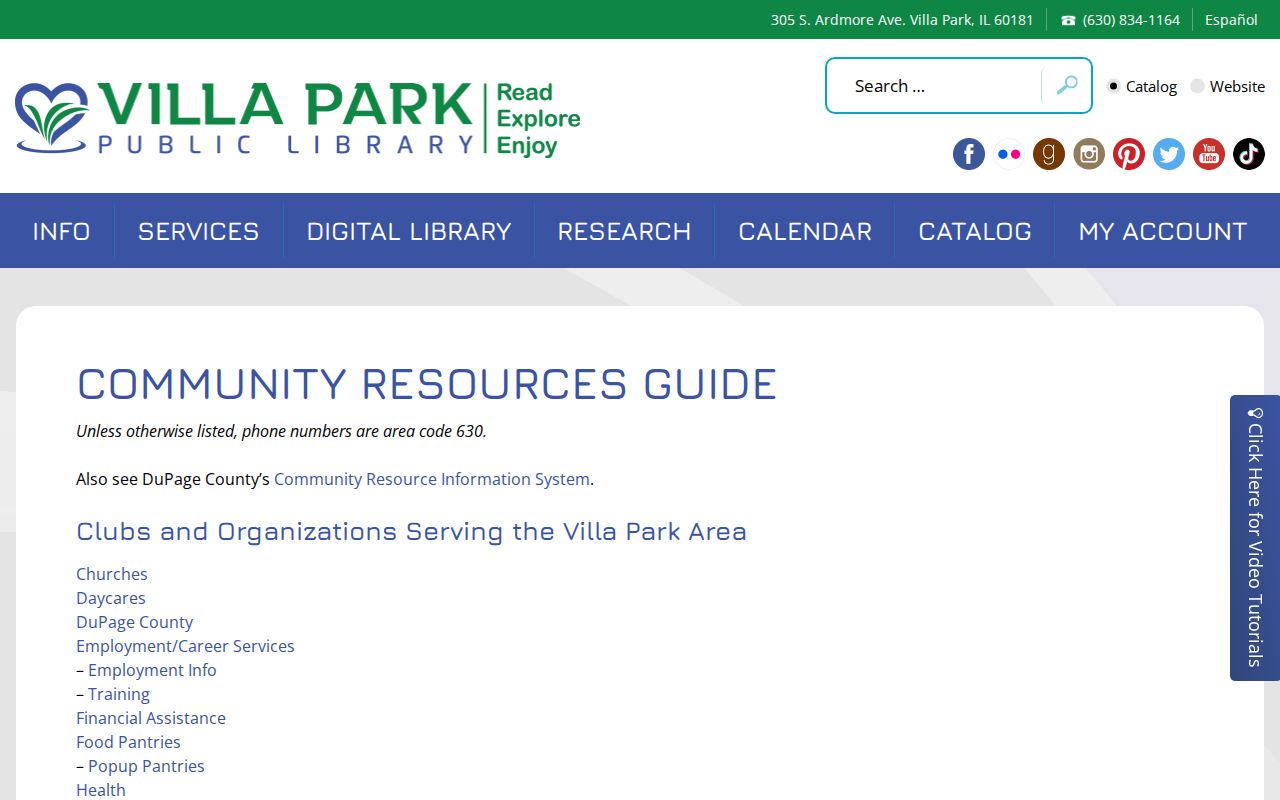
No official Villa Park neighborhood-association umbrella, HOA list, block-watch roster, or public private-member directory was found. The useful alternative is a public civic contact. The Villa Park Public Library clubs and organizations directory points to local groups, while the Village publishes commissions and appointment channels.
Village commissions
Historical Preservation, Garden Village, Growth, GREEN, and Community Recreation are public bodies with meeting or appointment information.
Library and service groups
Friends of the Library, Lions, Rotary, Kiwanis, and Historical Museum participation appeared in library civic resources.
Block and park route
The Village Find route links residents with a block-party request or nearby park without publishing household names.
The VPPL community organizations page is the strongest public directory lead found for local civic contact.
The Historical Museum, Friends of the Library, service clubs, and public commissions can create real contact around shared interests. None should be presented as representing every address. Verify a group's current contact route before attending or sending personal details.
Villa Park Block Deeds
The DuPage Recorder search adds the legal layer. Search by name, PIN, address, document number, type, or date when online coverage supports it. The address index begins in 1995, the PIN index in 1985, and the name index in 1961. Older county records reach back to 1839 through counter and archive channels.
A deed names transaction parties, while a plat shows lot, block, subdivision, easement, or other recorded land geometry. Neither is a list of all nearby residents. When the web index stops, call the Recorder at 630-407-5400, use the research desk, inspect a book and page reference, or ask IRAD about an older transferred series. The library and Museum Resource Center can help bridge an old street or subdivision label.
Official Villa Park Neighbor Tools
Official sources are narrower than commercial neighbor tools, but their custody and field meanings are clear. A private compilation may merge old addresses, relatives, phones, or names without showing the record date or correction route. Use a county or state result when a parcel, filing, or registration fact matters.
| Source type | Strength | Limit |
|---|---|---|
| Official parcel, deed, or voter source | Named custodian, defined fields, direct correction route | Shows only the record's lawful scope |
| Commercial neighbor compilation | May combine public and private feeds | Can be stale, mismatched, incomplete, or costly |
| Public civic directory | Current meeting and joining channels | Does not reveal a private member roster |
For a record missing online, use the custodian's counter, phone, mail, or focused Illinois FOIA request. Ask for an existing record by address, PIN, date range, and department. An agency does not have to create a new list of Villa Park neighbors. Electronic records can be requested in a feasible format, and releasable parts may be supplied when other fields are exempt.
Protect Villa Park Neighbor Privacy
A parcel is not a person. Utility, delivery, and private association lists are not public government fields. Recorded owners are not always occupants, and voter law does not create an open nearby-name list. Illinois's Address Confidentiality Program protects eligible survivors through a substitute address for new state and local records and special voter safeguards. It cannot erase all older public references.
Correct a source error with the office that created the record. Give the record number, explain the wrong field, and ask which correction or redaction rule applies. A private suppression request is separate from a government correction and may not last if the underlying public source stays wrong.
Lawful use. Research Villa Park neighbors only for lawful personal and civic purposes. Never use an address, map, or name to stalk, harass, threaten, or intimidate anyone.